Anti-Science Crusaders
The Pernicious Effects of Ignorance and Choosing “Beliefs” Over Evidence

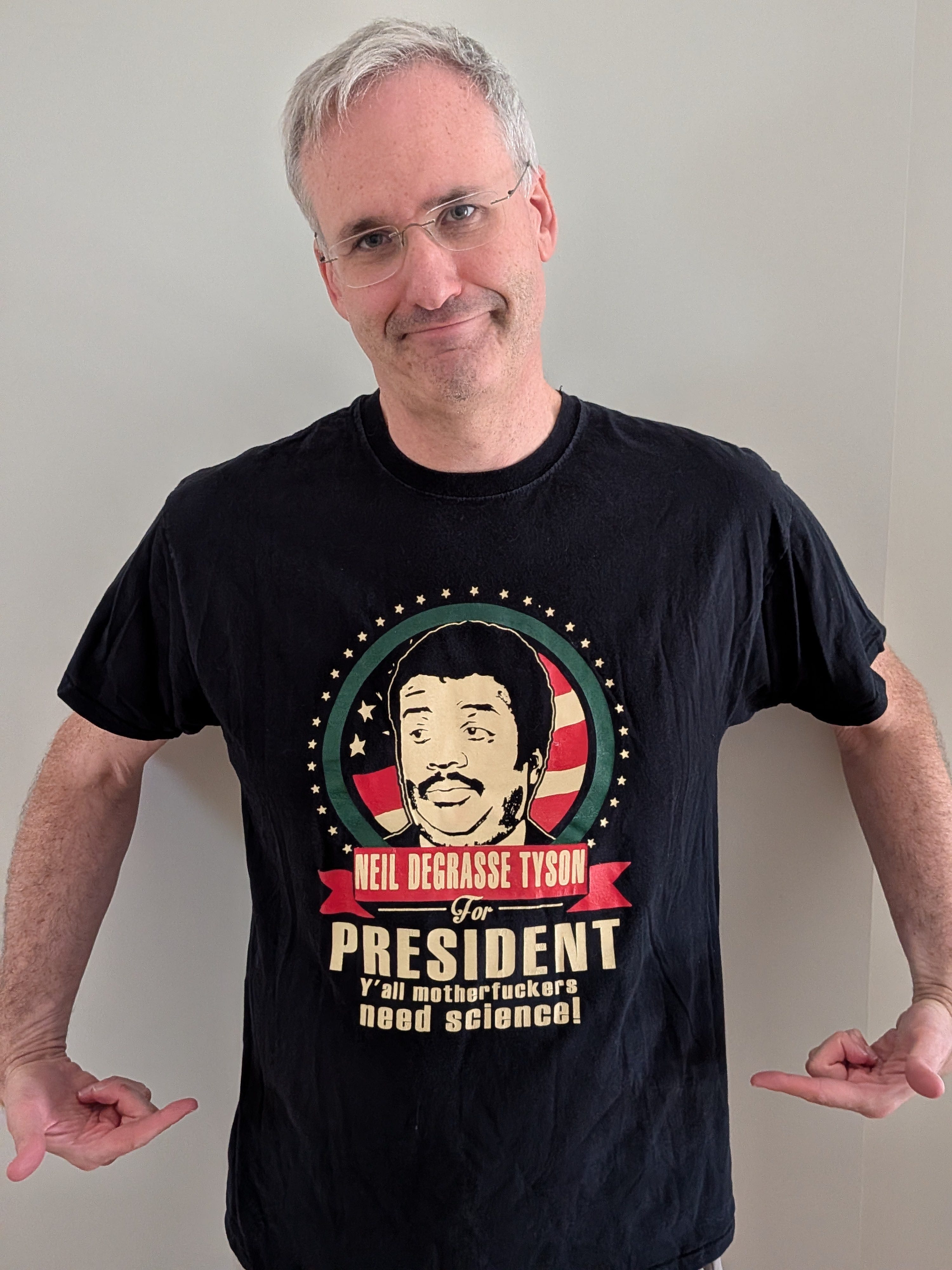
The good thing about science is that it’s true whether or not you believe in it.
If you have been following recent proceedings on Capitol Hill, you were treated to yet another round of exhausting political theater: Republican Senate committee members grilling Dr. Anthony Fauci. Rather than a genuine inquiry into pandemic preparedness, the hearings were an attempt to re-litigate the impossible decisions made during the darkest days of the Covid era. Politicians with zero epidemiological training eagerly cast blame on Fauci, prioritizing partisan soundbites over any acknowledgment of his decades of earnest public service. Here is a serious, nonpartisan professional who has dedicated his life to the interest of global health and science, surviving multiple administrations across both parties and leading the charge against HIV/AIDS, Ebola, and Zika, only to be reduced to a political punching bag by those looking to score cheap points with their base. See Dr. Fauci’s memoir On Call: A Doctor’s Journey in Public Service to get a clear understanding of the man and his thinking.
This vilification of public health officials does not exist in a vacuum; it provides oxygen to incredibly dangerous fringe movements. Take the deadly effects of Health and Human Services Secretary Robert F. Kennedy Jr.’s relentless vaccine conspiracies. For years, RFK Jr. has peddled unfounded claims linking vaccines to a host of ailments, operating under the guise of “health freedom.” The results of this rhetoric are not abstract. They are measurable and tragic, as discussed in my previous blog, Conspiracy Theories: From Healthy Skepticism to Deadly Consequences. We are now seeing a completely avoidable surge in measles cases, a disease that was once effectively eradicated in this country, leading to entirely preventable deaths. When conspiracies replace clinical data, the most vulnerable among us pay the ultimate price.
This medical skepticism is further amplified by a new class of untrained social media influencers and media personalities who have appointed themselves as rogue public health experts. Figures ranging from podcaster Joe Rogan to comedian Bill Maher frequently cast doubt on established medical consensus, despite lacking medical degrees or evidently much basic scientific literacy. Under the shield of “just asking questions” or promoting “alternative wellness,” they broadcast vaccine skepticism to millions of listeners. They substitute rigorous peer-reviewed science with gut feelings and anecdotal pseudo-science, creating an environment where a comedian’s hunch is treated with the same weight as a virologist’s clinical trial. There is no “both sides” to this debate. There is evidence and there is conjecture.
Sidebar: The popular myth that MMR vaccines cause autism all stems from one published article in the journal “Lancet” by Dr. Andrew Wakefield in 1998 that was so thoroughly debunked that he had his medical license permanently revoked. The United Kingdom’s General Medical Council disciplinary panel found Wakefield guilty of dishonesty and “serious professional misconduct.”
The supreme irony of this widespread medical skepticism is that it arrives precisely at a moment when science is delivering unprecedented miracles. The rapid development of mRNA vaccines was not a rushed, suspicious experiment, but the culmination of decades of agonizingly hard, underfunded scientific labor. Beyond pulling the world out of a once-in-a-century pandemic through the acceleration of herd immunity, the mRNA platform now offers legitimate, tangible hope for treating myriad other conditions, including personalized vaccines for cancer. We are standing on the precipice of a golden age of medicine. Yet a vocal minority, fostered by ignorance and dogma, is dragging us back to an age where the only hope we had for surviving diseases was our own individual immune systems. This was a time when the average human did not live to what we now consider to be merely “middle age.”
Science is the fundamental bedrock of modern human flourishing. It has doubled our life expectancy, eradicated ancient plagues, and drastically reduced infant mortality. It is the engine that enables space travel, powers the global air transportation network we trust with our lives every day, and engineered the miraculous, hyper-connected cell phones in our pockets. The modern skeptics use the very fruits of scientific labor, broadcasting their anti-science rhetoric on satellites and silicon chips, to undermine the institutions that made their comfortable lives possible.
Of course, the anti-science crusade isn’t just led by laymen; it is occasionally amplified and given oxygen by quack doctors and rogue scientists who are either trying to make a name for themselves or have a massive political axe to grind. Consider Senator Rand Paul, an ophthalmologist by training, who has developed a deeply unhealthy, almost pathological obsession with attacking Anthony Fauci. When individuals with letters after their names abandon their scientific objectivity to cater to a political demographic, they provide a dangerous veneer of credibility to outright misinformation. They betray their oaths and their training for the sake of the spotlight.
Perhaps the most baffling contradiction in this entire ecosystem is Elon Musk. Here is the ultimate tech guru: a man whose entire fortune and legacy are built on the hard laws of physics, advanced engineering, and cutting-edge material science. Yet, Musk actively supports and platforms an administration and political movement that routinely disavows science in critical areas like medicine and climate protection. Musk has advocated and led the charge through his catastrophic DOGE of the gutting of critical medical research funding, while also turning his back on the green movement that led to the popular adoption of electric vehicles and the rise of Tesla. The cognitive dissonance required to build reusable orbital rockets and mainstream EVs, while simultaneously aligning with forces that treat climate change as a hoax and public health as a tyranny, is staggering.
Despite all of this, I remain fundamentally optimistic about our technological future. My hope is that the rampant social media conspiracies and algorithm-driven misinformation that have poisoned our current discourse will eventually be outweighed by the next iteration of technology: Artificial Intelligence. As Large Language Models become faster, smarter, and more deeply integrated into our daily lives, they have the potential to serve as objective arbiters of truth. By instantly providing verified facts, synthesizing complex medical data, and neutrally disproving dangerous conspiracies, AI can become the ultimate counterweight to the pernicious ignorance of the modern internet. If we build these models right, they will help us navigate back to a society that values objective truths and the undeniable miracles of science.
Good one
Hi Ron,
Great article. I agree that it is remarkable that science is disrespected by so many in our society, where so much material progress and prosperity have been built on its fruits.
I hope you are right that AI will eventually become a counterweight to misinformation and a more reliable source of truth. My reservation is that people still have to want to seek the truth and value it. I am less convinced that this is universal.
There are plenty of people, including some you point to, who are motivated by power, money, revenge, ideology or simply self-interest, and who seem quite willing to abandon truth. Add to this the relatively limited personal, legal, financial or political consequences for doing so, it almost seems as though there are strong incentives to do so.
To me, education is a critical part of the answer. By education, I don't just mean acquiring the skills necessary to get a job. I mean learning how to think critically, how to examine evidence, question sources and motivations, consider competing explanations and, perhaps most importantly, be willing to say, "I believed X, but the evidence suggests I was wrong."
What I think is overlooked when talking about science is that it evolves with knowledge, and theories improve or change as the evidence suggests. This is a feature of science, not a bug. It is what makes it robust. This is obviously very different from starting with a belief and searching for evidence that confirms it (confirmation bias in investment terms, I suppose).
I understand admitting we might be wrong can be very uncomfortable. God knows how much I like to be right. Changing your mind can have the nasty consequence of opening you up to questioning other things you have taken for granted, which may partly explain why people resist evidence even when it is readily available. It can lead to a lot of unfun work.
Therefore, I would add morality and ethics to education as well. Critical thinking can help determine what is likely to be true, but it doesn't necessarily make us care about truth, nor does it tell us what we should do with it. As I suspect is the case with Mr. Musk (and the others you mentioned in your article), someone can be perfectly capable of understanding the evidence and still choose to misrepresent or ignore it because doing so serves their interests. Truth needs to be valued.
No doubt AI will give us extraordinary access to knowledge, but I suspect we will still need educated, curious and ethical human beings who are willing to listen to what the evidence tells them and value truth even when they don't like the answer.
Best,
Arun