2026 World Cup Observations (that have nothing to do with the sport itself)
Finding a Happy Place Outside of One’s Homeland

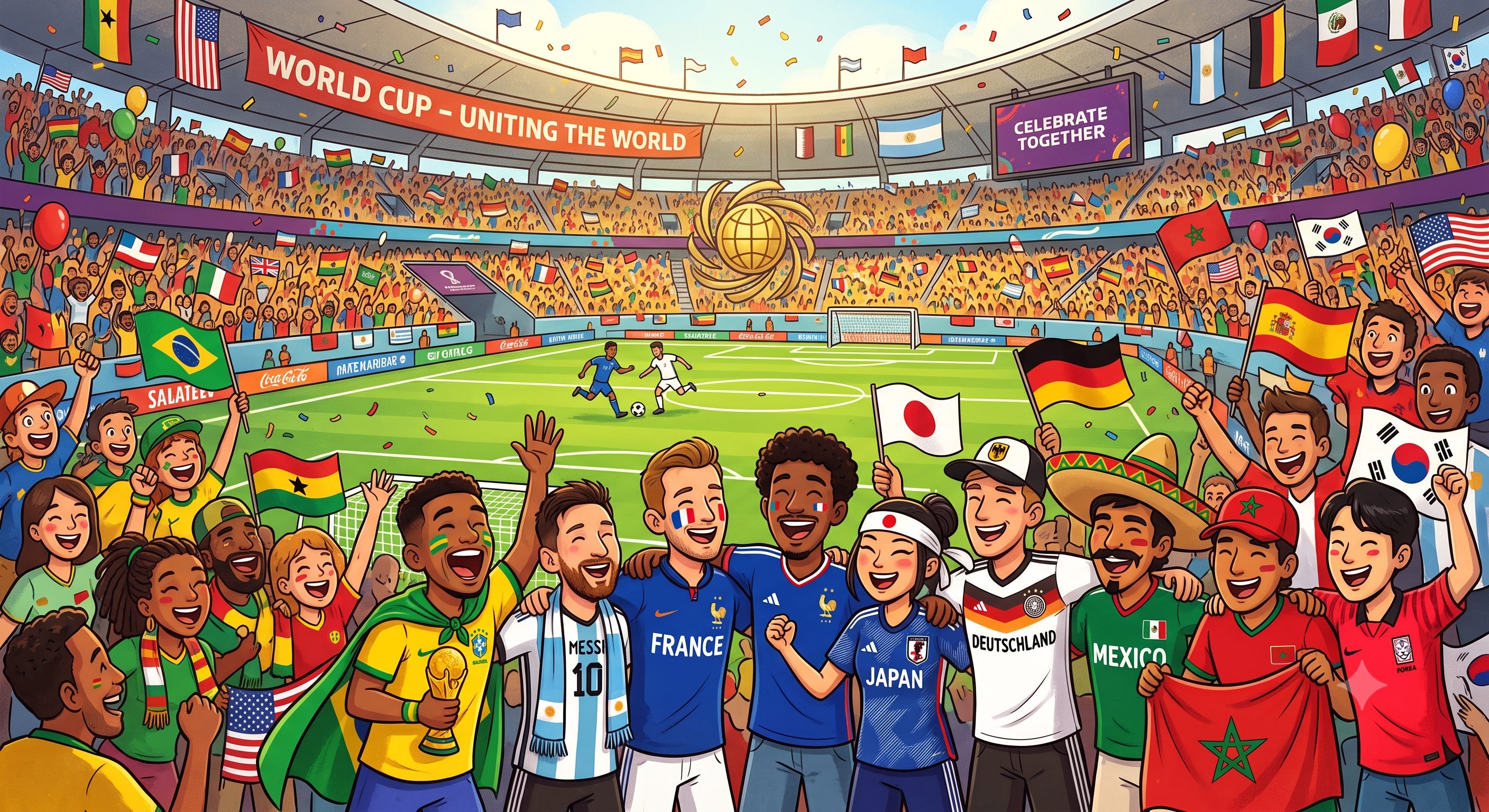
While I had the chance to attend a couple of professional soccer/football matches when I lived in Spain, I am not much of a fan and don’t follow the sport very closely. That said, it’s pretty hard to avoid World Cup Fever when it lands right on your doorstep. With Boston (or technically, Foxborough) being one of the North American host cities for 2026, it’s been pretty hard to avoid. My first thought on the topic: while I might enjoy watching a live match, I was not going to pay the insanely corrupt FIFA organization exorbitant money for a ticket.
The second time I gave the World Cup any thought was more upbeat, however. When Scotland’s “Tartan Army” invaded Boston a few weeks back for their first two group matches, I started seeing fans all over the city and immediately drew a strong positive vibe from them. Before hardly any time had passed, it seemed like all of Boston was picking up that same vibe. In no time, my social media was flooded with videos of the Scottish fans jubilantly enjoying their New England experience (and drinking Boston’s pubs dry). By the same token, locals had really taken to this huge, happy, kilt-wearing, bagpipe-playing crew of fans who’d made their way across the pond to support their team.
Having “liked” various social meda posts celebrating the newfound lovefest between Scottish citizens and Boston residents, YouTube’s algorithms then started offering me video after video of foreigners who had come to the US, often for the first time, and were full of “positive” shock and awe at American culture, food, and way of life. This all got me reflecting. I am one of a small percentage of Americans who have spent a significant part of his life living abroad. While I have lived in two American cities in my life (Boston and Phoenix), I have also resided in four European cities (chronologically: Madrid, London, Amsterdam, and Barcelona). I have also traveled to varying degrees in over 140 countries on six continents. While this does not make me an authority on anything, this experience has lent some perspective on cross-border cultural norms and values, particularly contrasting life in the US with life in parts of both southern and northern Europe.
It has therefore been quite entertaining to me to watch clips of foreign visitors to the US, particularly Europeans, as they visited the US for possibly the first time and being amazed at certain aspects of US life (see example clips here, here, and here). Ranch dressing obsessions aside, in some of these videos, the visitors have even expressed a strong and legitimate desire to move to the US after experiencing at least a taste of what it has to offer. My feed has also found videos of expats who have already moved to the US and now sing their adopted homeland’s praises, with a common thread of “it’s nothing like what the foreign media portrays.”
It is certainly true that America’s problems can be easily identified as they tend to get amplified in the foreign press. We absolutely have an issue with gun violence and mass shootings, to start. We also have food diets that can be bewildering (both positively and negatively) for their taste and portions, often forsaking the chemically-infused highly processed nature of much of our typical meal consumptions. There are a number of viral videos from the World Cup that show the visitor’s amazement at the size and low cost of their fast food meal and quite notably the unlimited free refills provided on their favorite high fructose corn syrup-based carbonated beverages (hey, it’s all fun and games until someone overeats their way to Type 2 diabetes…).
Visitors have commented about American customer service (impressive to some, but somewhat superficial to others). Some videos show visitor shock at the liberal American use of air conditioning. While air conditioning is certainly nice on a hot day, some American businesses and public spaces frequently take this to an extreme. This is one of my all-time pet peeves, as elaborated in my grumpy summer travel blog last year, “Packing a Winter Coast for the Beach… and other Stupid Travel Experiences.”
All of these “feel good” videos seem to have proliferated in popularity with Americans who naturally take a measure of pride in visitors appreciating our cities, our food, and our culture. For those of the “right wing” persuasion, it looks like some sort of validation of “American exceptionalism” and that we truly live in the “greatest country on earth.” For those who are more politically neutral or agnostic, these videos are a pick-me-up and a reminder that we can enjoy and be thankful for what we have. Americans with political persuasions that would be commonly identified as “left wing” feel some relief that in spite of the US seemingly relinquishing its moral leadership and soft power in the world, it is still ok to be proud of our country and to respect our nation’s traditions, as imperfect as they may be.
Having lived across borders, I have identified some things where I feel in general the US gets it right, while there are other aspects of life where I feel Europe (very broadly speaking of course) has a more advanced approach. For entrepreneurs and innovators, it’s hard to argue that you can do much better than establishing yourself stateside. If you are concerned, however, about social safety nets, the US clearly comes up short compared with other advanced nations. All of this in a way can be traced back to America’s roots… i.e. “who would leave everything behind to take the boat to the new world?” Of course, it was those who either wanted to, or were forced to make a new life based to a large extent, for better or worse, on rugged individualism.
The “answer” in my mind lies somewhere in the middle. The closest I see to a happy medium in between the worst of the extremes, is largely found in northern Europe. In countries such as the Nordics, it is possible to be both a thriving capitalist entrepreneur who can become wealthy and successful, while also paying enough taxes to ensure that the collective population, regardless of socio-economic status, has access to life’s basic necessities of quality healthcare, housing, nourishment, and education.
There will forever be people who feel like the best place for them, based on their preferred lifestyle and values, is not the country where through virtue of the birth lottery, they happen to have been born and raised. People have immigrated since time immemorial to other countries in search of a life that is better suited to them. For some Europeans, the American “land of opportunity” and economic freedoms will provide that answer. For many Americans, moving abroad to a country with less violence and with more demonstrable social empathy for the downtrodden and less fortunate will be more of an appeal.
While I am no advocate for completely open borders, I do believe “the state” (as in “all” nations) must continue to allow mobility and reasonable immigration. This opens the opportunity for people to pursue their dreams and the lifestyle that best suits them. The value that immigrants bring to the US is enormous, both economically and socially. It is no wonder that when someone makes the life changing decision to move to another country, it is done out of a burning desire to find one’s happy place. That kind of motivation brings out the best in people and keeps them happy and productive.
The ultimate lesson from the fan and local interactions at this year’s World Cup is that we can see clearly with our own eyes how people of different backgrounds live and it’s possible for strangers to feel welcome and even embraced in a new land. There is no “one size fits all” country or city, but there is rather a wide variety of systems and cultures across the world that should provide nearly all people with an environment where they will most feel at home.
Right on spot.
What I’ve enjoyed about this World Cup is that it gave so many Europeans a chance to experience the U.S. firsthand instead of relying on headlines or stereotypes. There’s simply no substitute for forming your own opinion after visiting a country.
Watching parts of the linked YouTube compilations was very enjoyable. They made me smile, especially as a European who has been where they are.
It's moments like the World Cup that remind me people are separate from their governments. The vast majority of people across different countries want the same thing, and soccer is a great example of that.